16 DAYS OF ACTIVISM 2025 – ENDING DIGITAL VIOLENCE AGAINST WOMEN AND GIRLS IN THE GAMBIA

16 DAYS OF ACTIVISM 2025 – ENDING DIGITAL VIOLENCE AGAINST WOMEN AND GIRLS IN THE GAMBIA.

The theme for this year’s 16 Days of Activism Against Gender-Based Violence is a timely reminder to all that the safety of women and girls within the digital space must be prioritised by all users of the internet. Technology is an essential tool for education, business, leadership, activism, and social engagement. Yet, women and girls in The Gambia are disproportionately exposed to online harassment, cyberbullying, impersonation, stalking, sexual extortion, and non-consensual sharing of intimate content.
FLAG affirms that digital rights are human rights and should be given an equal level of attention as other forms of human rights violations. Digital violence against women and girls leads to a violation of their privacy, safety, bodily autonomy, and freedom of expression. The emotional, psychological and sometimes physical harm that results from digital violence contributes to the silencing of women and girls, particularly survivors of sexual and gender-based violence and human rights defenders.
While commending the Government of The Gambia for its efforts to regulate digital spaces, there is a critical need to embed gender-responsive cyber protection mechanisms within laws, policies and institutional systems to safeguard women and girls from digital violence.
FLAG will continue to champion this cause by:
• providing pro bono legal representation and advisory support for survivors of digital violence;
• contributing to policy advocacy for stronger laws on cyber harassment, online sexual exploitation, and implementation of data protection laws and policies;
• raising awareness and conducting community engagements on women’s digital rights;
• training law enforcement and justice actors on handling of digital violence cases;
• demanding accountability for perpetrators of all forms of violence against women and girls; and
• strengthening partnerships with government, civil society, schools, religious and community leaders to promote responsible and safe use of digital platforms.
We urge the State House of The Gambia, civil society organizations, media institutions and the public to:
• prioritise stronger protections for women and girls in digital spaces;
• promote digital literacy for parents, youth and schools, so communities understand the risks and how to prevent online harm;
• invest in gender-responsive investigative and reporting systems for cybercrimes; and
• contribute their quota in the enforcement of laws and policies protecting women and girls from all forms of gender-based violence.
Together, we can build a safer digital future where women and girls are protected, respected, and empowered—online and offline.


FLAG-Ending Digital Violence Statement (1)

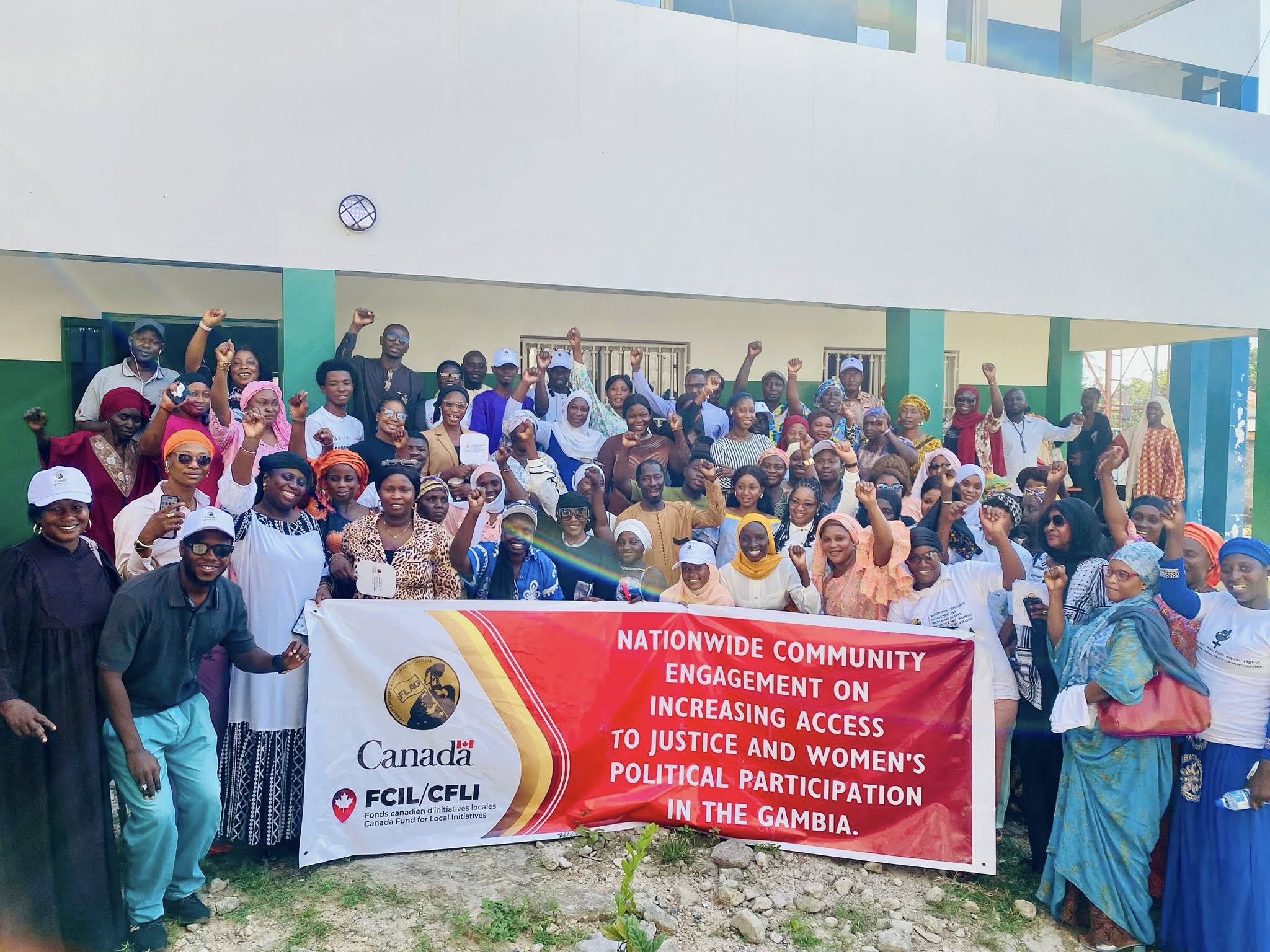
Nationwide Community On Increasing Access to Justice and Women’s Political Participation In Jarra Soma (LRR).

On November 22nd, we received a warm welcome in Jarra Soma (LRR) as we continue our journey to enhance access to justice and strengthen women’s political participation. The session opened with individual prayers, followed by an opening statement delivered by Ms. Anna Jaiteh on behalf of FLAG’s President.
May be an image of one or more people, people studying and text that says 'Canad O ECIL/CFLI NATIONWIDE NATIONWIDE.COMMUNITY COMMUNITY ENGAGEMENT ON INCREASING INCREASING-ACCESS ACCESS to JUSTICE AND WOMEN'S POLITICAL POLITICALPARTICIPA PARTICIPATION INTHEGAM IN THE GAMP'
Ms. Lala Touray is leading an insightful discussion on the barriers to women’s political participation and representation in The Gambia, with participants confidently engaging and taking ownership of the conversation.
May be an image of smiling
This activity is supported by Canada Fund for Local Initiatives (CFLI) through theEmbassy of Canada to Senegal
May be an image of one or more people, people studying, dais, hospital and text
Ms. Haddy Dandeh Jabbie shared key insights on the laws protecting women in The Gambia, highlighting the constitutional guarantees of equality, and women’s rights to vote and run for office. She also emphasized the protections provided under the Women’s Act and international instruments such as CEDAW and the Maputo Protocol.
Despite these frameworks, she noted that implementation gaps and societal barriers continue to hinder women’s full participation. She encouraged women to read and understand the Constitution to better advance their roles, responsibilities, and leadership. Ms. Jabbie stressed that promoting these rights is crucial for achieving gender equality and building inclusive governance structures for women and persons with disabilities.
May be an image of one or more people, table and dais
Participants especially women expressed strong and thoughtful views on how their communities are governed.
May be an image of one or more people, dais and text that says 'h n N n H i M it M M'
May be an image of one or more people and dais
May be an image of text
Particpants at the Community Engagement in Soma (LRR)
May be an image of one or more people and dais
The engagement brought together women community leaders , grassroot political actors, aspiring female politicians and other key stakeholders to build knowledge, skills and confidence in active political participation.
Our resource persons Lala Touray deliberated on Campaigns, Financing & Fundraising while Muhammed S Bah took us through the nitty gritty of #communications and #branding skills.
May be an image of one or more people and people smiling
The insightful session focused on strengthening women’s capacity to run effective political campaigns by understanding the essential tools needed for success. Participants explored how to craft a clear campaign message, identify target audiences, build strong communication strategies, and structure effective campaign teams. We also explored participants comprehension through #Pre and #Post tests.
May be an image of one or more people and dais
The session examined the critical role of campaign financing—one of the biggest barriers for women in politics. From limited personal income to restricted access to donor networks, women often face significant financial obstacles. The session provided strategies to overcome these gaps, including accessing party support, building financial literacy, and forming community-based support networks.
May be an image of one or more people and dais
Our discussions on fundraising highlighted practical approaches such as community contributions, institutional support, individual donors, and event-based fundraising. Participants were encouraged to adopt transparent, ethical, and creative fundraising practices while staying compliant with national laws on political financing.
May be an image of one or more people, dais and text
Strengthening women’s leadership requires not just knowledge, but access to resources, networks, and supportive structures. By building financial confidence and campaign skills, women are better positioned to take up leadership roles and influence decision-making at all levels.
Together, we continue to push for inclusive and gender-responsive and persons with disabilities political participation.
May be an image of one or more people, dais and text
This activity is supported by Canada Fund for Local
Initiatives through (CFLI) through Embassy of Canada to Senegal

FLAG Launches New Project on ”Increasing Access to Justice and Women’s Political Participation in The Gambia”


FLAG Launches New Initiative: Increasing Access to Justice and Women’s Political Participation in The Gambia.


May be an image of one or more people and text that says 'Canada FCIL/CFLI FCIL/ Fonasconedeo ිත MaTdor Ta CeoWatves SaNE NATIONWIDE COMMUNITY ENGAGEMENT ON INCREASING ACCESS to JUSTICE AND WOMEN'S POLITICAL PARTICIPATION IN THE GAMBIA.'

Female Lawyer’s Association Gambia (FLAG) is proud to announce its latest project aimed at transforming the landscape of women’s rights and political engagement across The Gambia. This ambitious initiative focuses on increasing access to justice and empowering women to participate actively in the country’s political processes, particularly in key regions vital to national development. The project kickstarts in Brikama (West Coast Region) on the 15th November, 2025 funded by Canada Fund For Local Initiatives (CFLI).


May be an image of one or more people


The project will operate across several strategic regions including Banjul, Kanifing Municipality, West Coast Region, Central River Region, Upper River Region, Lower River Region, and North Bank Region. These areas, characterized by diverse demographics and varying socio-cultural norms, are crucial for fostering inclusive governance. Women in these regions face different degrees of marginalization, making them ideal focal points for driving meaningful change.

May be an image of one or more people, people studying and text

By targeting these communities, the project aims to address specific local barriers to women’s political involvement, ranging from cultural and social norms to limited legal awareness. Empowering women at the community level ensures that their voices are heard and that they can influence policies affecting their livelihoods and social standing. Ultimately, the project aspires to embed gender equality deeply within local governance structures and community life.


May be an image of one or more people, hospital and text


In The Gambia, women remain significantly underrepresented in political spaces. To date, no woman has held the presidency, and only a handful of women occupy ministerial positions or serve as members of the National Assembly. Women in politics face social shaming, online bullying, and limited support from political parties, which tend to be male-dominated. Cultural and religious norms further hinder women’s ambitions and participation.

FLAG’s project aims to challenge these systemic barriers by fostering an environment where women’s voices are valued and their leadership potential is recognized. Through targeted advocacy, community engagement, and capacity-building, the initiative seeks to create a political landscape where women’s participation is not just encouraged but institutionalized.

Targeted Regions for Long-lasting Impact

The project will operate across several strategic regions including Banjul, Kanifing Municipality, West Coast Region, Central River Region, Upper River Region, Lower River Region, and North Bank Region. These areas, characterized by diverse demographics and varying socio-cultural norms, are crucial for fostering inclusive governance. Women in these regions face different degrees of marginalization, making them ideal focal points for driving meaningful change.

By targeting these communities, the project aims to address specific local barriers to women’s political involvement, ranging from cultural and social norms to limited legal awareness. Empowering women at the community level ensures that their voices are heard and that they can influence policies affecting their livelihoods and social standing. Ultimately, the project aspires to embed gender equality deeply within local governance structures and community life.

Addressing Underrepresentation and Systemic Barriers

In The Gambia, women remain significantly underrepresented in political spaces. To date, no woman has held the presidency, and only a handful of women occupy ministerial positions or serve as members of the National Assembly. Women in politics face social shaming, online bullying, and limited support from political parties, which tend to be male-dominated. Cultural and religious norms further hinder women’s ambitions and participation.

FLAG’s project aims to challenge these systemic barriers by fostering an environment where women’s voices are valued and their leadership potential is recognized. Through targeted advocacy, community engagement, and capacity-building, the initiative seeks to create a political landscape where women’s participation is not just encouraged but institutionalized.

Project Goals and Long-term Vision

The overarching goal of this project is to significantly increase women’s access to justice and political participation, ensuring women can actively shape policies that impact their lives. Through awareness campaigns, legal empowerment activities, and strategic advocacy, FLAG aims to dismantle the barriers that limit women’s civic and political engagement.

The project envisions a more inclusive and representative governance system where women hold leadership roles at all levels—local councils, national assembly, and even the presidency. This transformation will promote gender-balanced policies addressing women’s needs and foster a culture of active civic participation. It will also strengthen the legal foundation for women’s rights, providing resources and support for justice in cases of gender-based violence and discrimination.

By inspiring future generations, the project aims to cultivate a society where women’s voices are an essential part of decision-making, leading to a more just, equitable, and prosperous Gambia.

Key Activities and Expected Outcomes

The project’s immediate activities are designed to generate tangible results quickly:

  • Workshops for Women in Politics: Conducted across the seven regions, these workshops will equip women with leadership skills, strategic campaigning techniques, and awareness of their political rights.
  • Community Engagements: Focused on educating women about their political rights, encouraging active participation in elections, and overcoming social and cultural barriers.
  • Radio & TV Programs: Amplifying women’s voices, sharing success stories, and raising awareness about the importance of women’s political involvement to inspire community-wide support.
  • Political Party Consultations: Engaging political party leaders to institutionalize women’s participation, ensuring women are included in leadership structures and decision-making roles.
1 2 3 4 5 12